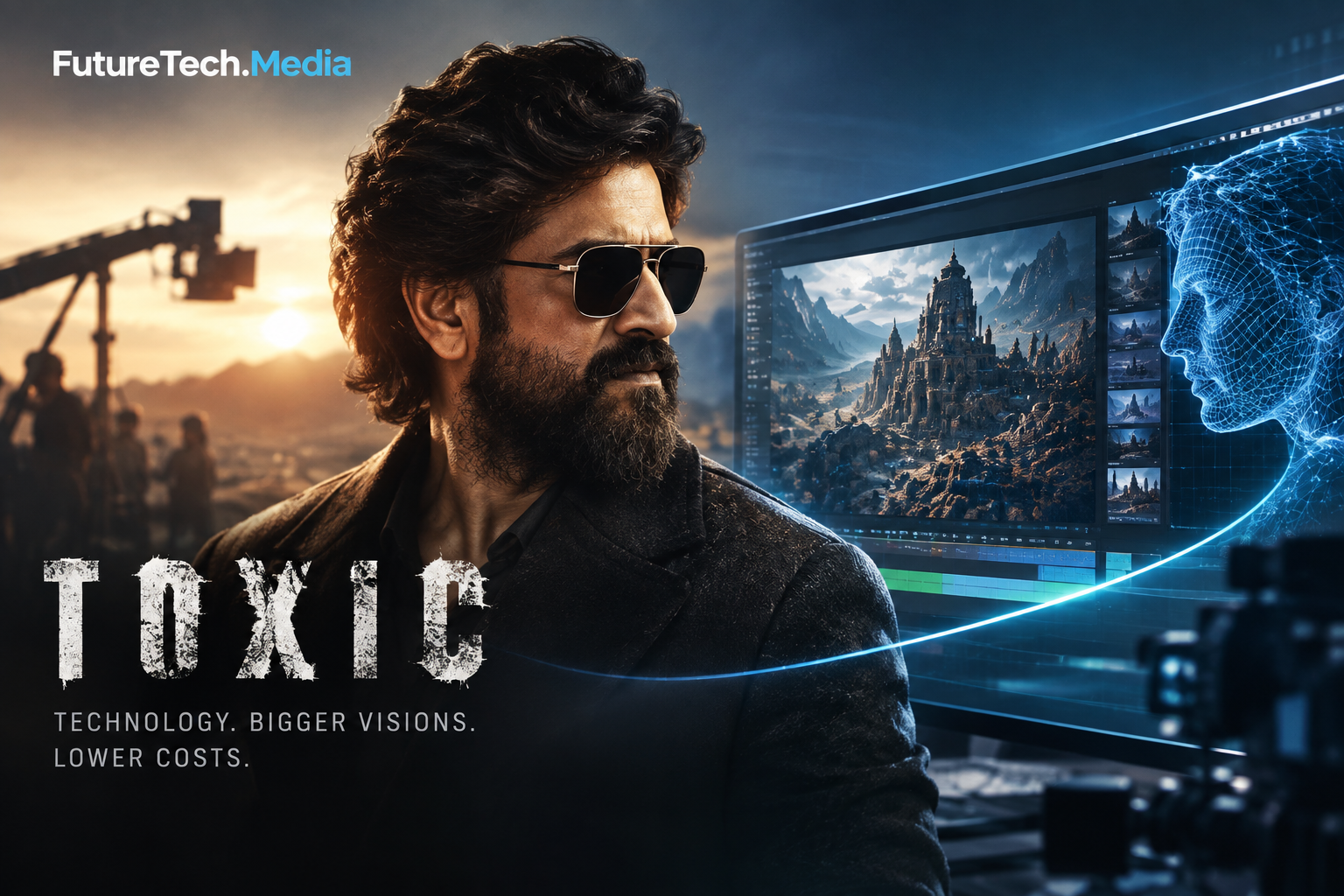
Mumbai, 06 Sep 2026: Yash-starrer Toxic: A Fairy Tale for Grown-Ups represents a new generation of Indian filmmaking where technology is becoming as important as cameras, sets and actors. With a reported production budget of around ₹500 crore, the film is among India’s most expensive cinematic projects, relying heavily on large-scale visual effects and digital production.
The interesting technology story is not that AI has made Toxic a low-cost movie. Rather, it is how VFX, digital environments, computer-generated imagery and increasingly AI-assisted workflows can deliver visual scale that would be extremely expensive or sometimes impossible to achieve entirely through physical production.
A modern film can digitally create locations, crowds, action environments, period settings and complex visual sequences without physically constructing everything. This can reduce the need for expensive sets, location logistics and repeated physical shooting while giving directors much greater creative flexibility.
AI is taking this transformation further. Generative tools can assist filmmakers with concept art, storyboards, pre-visualisation, background creation, editing, dubbing, localisation and marketing. While the makers of Toxic have not publicly disclosed the extent of generative AI used in the film, the wider industry is already experimenting with AI to reduce production time and costs.
The impact could become much bigger over the next five years. A visual sequence that once required hundreds of artists, large sets and weeks of work could increasingly be developed through smaller technology-driven teams. AI video companies are already demonstrating dramatic reductions in the cost and turnaround time of short-form production.
This could eventually change the economics of Indian cinema. Technology may allow a ₹50-crore filmmaker to achieve visual possibilities that previously required a ₹100-crore production, while large-budget filmmakers could use the same technology to create even more ambitious worlds.
The future of cinema, therefore, may not be about replacing actors, directors or artists with AI. It may be about giving creative teams more powerful tools to produce bigger ideas with less time, fewer physical resources and greater global scalability.
Toxic is an important example of where Indian cinema is heading: from traditional filmmaking to technology-powered filmmaking.
The next revolution in movies may not be bigger cameras or bigger stars—it may be smarter technology.
Priyanshi, Author & Sub Editor
Media Expert.